
Turning Potential Customers into Loyal Customers: A Smarter Marketing Approach
Introduction
Every business wants more customers. But attracting people to your brand is only the beginning. The real challenge is turning those first-time visitors into customers who trust your business, return for more, and recommend your products or services to others.
In today’s competitive digital world, customers have plenty of choices. They compare brands, read reviews, explore social media pages, and look for businesses that understand their needs. Simply promoting a product is no longer enough. Businesses need a smarter marketing approach that focuses on building relationships, creating meaningful experiences, and earning customer trust.
This is where strategic digital marketing makes a difference. With the right combination of content, communication, personalization, and customer engagement, businesses can move beyond one-time sales and build long-term relationships.
1. Understand Your Customers Before Marketing to Them
Successful marketing begins with understanding people. Before creating advertisements or planning campaigns, businesses need to know who their customers are, what they need, and what influences their decisions.
Think about your ideal customer. What problems are they trying to solve? What information do they search for online? Which platforms do they use most often? Understanding these details helps businesses create marketing messages that feel relevant rather than random.
Customer research can include website analytics, social media insights, customer feedback, surveys, and keyword research. These insights help identify patterns in customer behaviour and reveal opportunities to improve your marketing strategy.
When customers feel understood, they are more likely to pay attention to your brand.
2. Create Content That Builds Trust
Content plays an important role in attracting potential customers and helping them make informed decisions. However, effective content marketing is not just about posting regularly or promoting products every day.
People connect with content that answers their questions, solves problems, or offers something useful. A business can share educational blog posts, practical tips, product demonstrations, customer experiences, and helpful social media content to build credibility.
For example, a skincare brand can publish content about choosing products for different skin types instead of simply advertising its products. A digital marketing agency can share website optimization tips or explain how businesses can improve their online visibility.
This approach positions the brand as a helpful resource rather than just another seller.
Over time, valuable content builds familiarity and trust, making customers more comfortable choosing your business.
3. Build a Strong and Consistent Online Presence
Your online presence often creates the first impression of your business. A potential customer might discover you through Google, visit your website, and then check your Instagram or LinkedIn profile before making a decision.
If your brand looks professional on one platform but inactive or inconsistent on another, customers may hesitate to trust it.
A strong online presence requires more than attractive visuals. Your website should be easy to navigate, your social media profiles should communicate your brand clearly, and your content should reflect a consistent identity.
Search engine optimization (SEO) helps potential customers discover your business when they search for relevant products or services. Social media marketing creates opportunities for interaction, while a well-designed website gives visitors the information they need to take the next step.
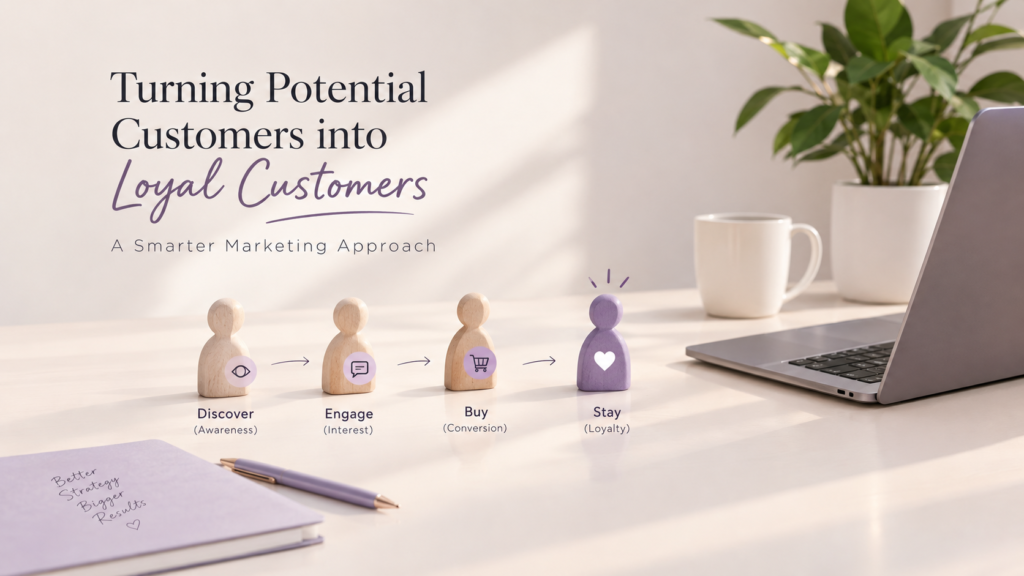
When these channels work together, customers can move naturally from discovering your brand to considering your services.
4. Personalize the Customer Experience
Customers appreciate businesses that make their experience feel relevant to their needs. Personalization helps brands communicate with people based on their interests, preferences, and previous interactions.
This does not mean every message needs to be completely different. Small changes can make a meaningful difference.
For example, an online store can recommend products related to a customer’s previous purchase. A service-based business can share helpful information based on a visitor’s interests. Email campaigns can provide relevant updates instead of sending the same promotional message to everyone.
The key is to make communication useful, timely, and respectful.
Businesses should also handle customer information responsibly and avoid making personalization feel intrusive. When done thoughtfully, personalized marketing helps customers feel valued and makes the overall experience more engaging.
5. Make the Customer Journey Simple
Even interested customers may leave if the process of purchasing a product or contacting a business feels complicated.
Imagine someone discovers your brand through social media and decides to learn more. If your website takes too long to load, your services are difficult to understand, or your contact details are hard to find, that potential customer may choose another business.
A smarter marketing strategy looks at every step of the customer journey, from the first interaction to the final purchase.
Make sure your website loads quickly, your service information is clear, and your calls to action tell visitors what to do next. Keep enquiry forms simple and provide convenient ways to contact your business.
For e-commerce brands, an easy checkout process and transparent pricing can reduce hesitation.
The easier you make it for customers to take action, the fewer unnecessary barriers stand between interest and conversion.
6. Use Customer Feedback to Improve
Customer feedback is one of the most valuable sources of information for any business. Reviews, messages, comments, and direct conversations can reveal what customers appreciate and where improvements are needed.
Instead of viewing feedback only as a way to measure satisfaction, use it to understand the complete customer experience.
If several customers mention the same issue, it may indicate an area that needs attention. If customers consistently praise a particular service, that strength can become an important part of your marketing message.
Responding to reviews and addressing concerns also shows that your business values its customers.
Of course, not every piece of feedback will be positive. Listening calmly, responding professionally, and taking reasonable action can turn a disappointing experience into an opportunity to rebuild trust.
Customers remember how a business treats them, especially when something goes wrong.
7. Turn First-Time Buyers into Repeat Customers
The relationship should not end when a customer makes a purchase. In many businesses, the opportunity to build loyalty begins after the first sale.
Follow-up emails, useful product guidance, loyalty rewards, personalized offers, and friendly customer support can encourage customers to return.
For example, a business selling digital services might follow up after completing a project to check whether the client is satisfied and offer guidance for the next stage of growth. An online store might send helpful product-care tips after an order is delivered.
These small actions show customers that the business cares about more than the transaction.
However, communication should always have a purpose. Too many promotional messages can become frustrating and may cause customers to disengage.
The goal is to stay connected without overwhelming people.
8. Measure Results and Improve Your Strategy
Smart marketing is not based on assumptions alone. It involves understanding what works, identifying what does not, and making improvements over time.
Businesses can track website traffic, conversion rates, email engagement, repeat purchases, customer retention, and social media interactions to evaluate their performance.
For instance, a social media campaign may generate many clicks but very few enquiries. This could mean the landing page needs improvement or the message is attracting the wrong audience.
Similarly, a website may receive consistent traffic but produce few sales. Reviewing the content, user experience, pricing information, and calls to action may reveal the problem.
Not every marketing activity needs to deliver immediate sales. Some build awareness, while others develop trust or encourage repeat purchases. Measuring the right outcomes helps businesses understand how each activity contributes to growth.
Conclusion: Build Relationships, Not Just Sales
Turning potential customers into loyal customers takes more than a good advertisement or a successful marketing campaign. It requires a clear understanding of your audience, valuable content, a consistent online presence, and a customer experience that feels easy and trustworthy.
Every interaction matters. The first social media post someone sees, the information they find on your website, the response they receive to an enquiry, and the support they experience after purchasing can all influence their relationship with your brand.
A smarter marketing approach brings these experiences together into one meaningful journey.
When businesses focus on solving real problems, communicating honestly, and delivering consistent value, customers have more reasons to stay.
Because long-term business growth is not just about finding new customers. It is about giving people a reason to choose you again.
Hi, this is a comment.
To get started with moderating, editing, and deleting comments, please visit the Comments screen in the dashboard.
Commenter avatars come from Gravatar.